Table of Contents
- Why a Detailed Wedding Day Timeline Matters for Large Events
- Getting Ready Timeline: Hair, Makeup, and Photography
- Ceremony Start Time and Processional Logistics
- Wedding Party Portraits and Golden Hour Photography
- Large Wedding Guest Flow Management and Cocktail Hour
- Reception Program Flow: Dinner, Toasts, and Dancing
- Using a Wedding Day Schedule Template and Run of Show Software
- Coordinating Vendors with Wedding Day Run of Show Software
- Frequently Asked Questions
Last Updated: October 2, 2026
Why a Detailed Wedding Day Timeline Matters for Large Events
A wedding day timeline for large events is the operational backbone that keeps 200+ guests, multiple vendors, and your entire wedding party moving in sync. Without one, you're managing chaos through group texts and last-minute phone calls. With one, every person knows exactly when and where they need to be.
Large weddings multiply logistics: hair and makeup take three hours for eight people, processional timing must account for 150 guests finding seats, and cocktail hour must balance photography with guest flow. Reception timing, dinner, toasts, dancing, depends on precise coordination.
The real benefit is knowing your vendors, family members, and wedding party work from the same document. At HAPPILY ON TIME, couples reduce stress by shifting from scattered spreadsheets and group texts to a single, live-updating wedding day timeline for large events. When changes happen, everyone updates simultaneously instead of through phone chains.
Getting Ready Timeline: Hair, Makeup, and Photography
Start your getting ready timeline 4-5 hours before the ceremony to allow time for hair, makeup, dressing, and getting ready photos.
For a bridal party of 8-10 people, allocate approximately 45 minutes per person for hair and makeup combined. If you're using two stylists, you can overlap appointments and reduce total time by 30-40 minutes. Start with whoever has the most complex hairstyle or those who need the most time, then move to simpler styles while the photographer captures candid moments.
Build a 30-minute buffer between makeup completion and formal photos for final touches and breathing room.
Schedule your getting ready photographer 15 minutes before hair and makeup begins. For large weddings, a dedicated getting ready photographer (separate from ceremony photographer) prevents bottlenecks and ensures simultaneous coverage.
Ceremony Start Time and Processional Logistics
For large weddings, account for guest arrival time and the reality that large groups move slower than expected. Plan for guests to arrive 30-45 minutes before the ceremony, though this timeline often compresses.
Guest Arrival Timing for 200+ Guests
For 200+ guests, assume 15-20% arrive in the final 10 minutes. Open doors 45 minutes early, but expect most guests in the final 20 minutes.
Brief your venue coordinator to hold the processional if guests are still being seated 5 minutes before start time. A 5-minute delay improves the experience for latecomers without disrupting those already seated.
Accessibility and Mobility Considerations
Reserve front-row accessible seating (aisle seats with space for wheelchairs or walkers) and communicate availability in your invitation or wedding website.
Identify accessible entrances and routes to seating. For large ceremonies, arrange two accessible entrances to prevent bottlenecks.
Allow 10-15 minutes before the processional if guests use mobility devices, preventing the ceremony from starting while they're still being seated.
Processional Timing and Pacing
The processional typically takes 8-12 minutes for a large wedding party. For 250+ guests, add 2-3 minutes to account for guests standing and settling.
Provide a written processional order to your officiant and wedding party one week before. Do a walk-through 30 minutes before guests arrive.
Brief musicians or DJ on pacing: one person every 10-15 seconds allows deliberate walking and gives guests time to settle.
Sound Check and Microphone Logistics
Coordinate with musicians or DJ on timing and technical setup. Conduct a sound check 45 minutes before guests arrive to troubleshoot microphone feedback and speaker placement.
Ensure your officiant's microphone is tested and working. Brief them on technique: hold at chin level, speak clearly, avoid turning away. Guests in the back cannot hear without amplification.
Building Contingency Buffers into Your Start Time
Build a 15-20 minute buffer between scheduled and actual ceremony start time. Communicate the official time to guests, but brief vendors on the real start time, typically 15 minutes later.
This buffer prevents cascading delays. Communicate with your photographer and caterer that ceremony timing may shift by 10-15 minutes.
Contingency Plan for Significant Delays
If your ceremony runs more than 20 minutes late, notify your caterer and photographer immediately so they can adjust dinner service and golden hour timing.
Wedding Party Portraits and Golden Hour Photography
Schedule wedding party portraits immediately after the ceremony, before cocktail hour. Plan 30-45 minutes for large weddings.
Golden hour (60-90 minutes before sunset) produces the most flattering light. Schedule your primary photographer to focus exclusively on portraits during this window.
Organize wedding party groups beforehand. Have your photographer or planner call out groupings to prevent wasted time.
For 200+ guests, consider a second photographer for family formals while your primary photographer captures couple portraits. This prevents golden hour from disappearing during setup.
Large Wedding Guest Flow Management and Cocktail Hour
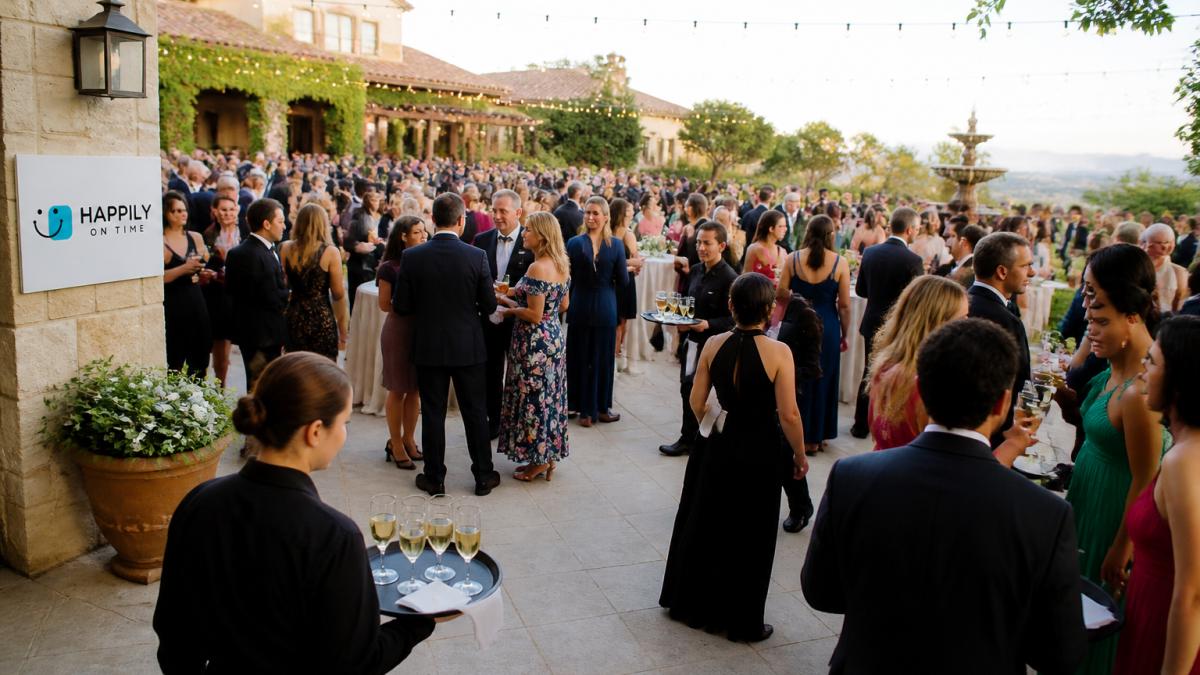
Cocktail hour for 200+ guests requires deliberate flow management: large groups move slowly, guests with mobility limitations need extra time, and vendors struggle to keep pace.
Staggered Guest Transitions and Crowd Pacing
Implement a staged transition: brief your officiant to release guests in waves (rows 1-5, then remaining guests two minutes later). Position venue staff to gently direct guests in groups.
If spaces are separate, build 20-30 minutes extra cocktail time. Arrange shuttles: first wave 10 minutes after ceremony, second wave 15 minutes later.
Accessibility and Mobility Considerations
Allow 10-15 minutes after the ceremony before announcing the transition to cocktail hour, giving guests with mobility devices time to exit without feeling rushed.
Identify accessible routes between ceremony and cocktail spaces. For large events, arrange two routes to prevent bottlenecks.
Reserve wheelchair-accessible space on the dance floor. Brief your DJ that some guests may remain seated during dancing.
Bar and Food Station Logistics for 200+ Guests
For 200 guests, position two to three bars at opposite ends and center. Ensure each bar is fully stocked before guests arrive.
Position food stations at opposite ends of the space.
Cocktail Hour Duration and Buffer Time
Contingency Planning for Delays
Reception Program Flow: Dinner, Toasts, and Dancing
Your reception program flow determines whether your event feels organized or chaotic. For large weddings, structure matters. Dinner service should begin within 15 minutes of guests being seated. For 200 people, this typically takes 45-60 minutes to serve and have everyone begin eating.
Using a Wedding Day Schedule Template and Run of Show Software
A wedding day schedule template organizes all these timelines into one document. Your template should include start times for hair and makeup, ceremony, cocktail hour, dinner, toasts, dancing, and vendor arrival times. But a template alone doesn't solve the coordination problem, your vendors and wedding party still need to receive updates, and group texts create confusion.
Coordinating Vendors with Wedding Day Run of Show Software
Vendor coordination is where large weddings either succeed or fall apart. You're managing a photographer, videographer, caterer, florist, music/DJ, officiant, venue staff, and potentially a wedding planner. Each needs different information at different times.
Frequently Asked Questions
What is the typical timeline for a wedding day with 200+ guests?
A large wedding day typically spans 10-12 hours from hair and makeup start to final send-off. Hair and makeup begin 4-5 hours before the ceremony; first look and portraits happen 1-2 hours before; the ceremony runs 30-45 minutes; cocktail hour follows immediately after; dinner and toasts take 2-3 hours; dancing continues 2-4 hours. Buffer time between each phase prevents rushing and keeps the day calm.
How much buffer time should be included in a large wedding day schedule?
Plan 15-30 minutes of buffer time between major phases. For large events, add extra cushion during vendor transitions, guest movements, and photography sessions. Golden hour photography requires 20-30 minutes of built-in flexibility. Weather delays, vendor setup issues, and guest flow slowdowns are common in events with 200+ people, so buffer time prevents cascading delays that affect reception timing.
What is the best way to distribute a wedding day schedule template to your bridal party and vendors?
Provide each team member with a customized view showing only their relevant tasks and timing. Vendors receive schedules via text or email without requiring app downloads. Create a single source of truth, a wedding day run of show software or shared document, that updates automatically when changes occur. This eliminates confusion from scattered texts and ensures everyone stays synchronized throughout the day.
How do you manage guest flow during cocktail hour at a large wedding?
Direct guests from the ceremony to a designated cocktail area with clear signage. Stagger guest movement by dismissing ceremony rows in intervals (every 2-3 minutes). Position staff at exits to manage flow smoothly. Offer multiple food and beverage stations to prevent bottlenecks. For 200+ guests, allocate 60-90 minutes for cocktail hour to allow comfortable mingling and photography without rushing guests into the reception.
What are the biggest logistical challenges when planning a large wedding day timeline?
Coordinating multiple vendors (photographer, caterer, florist, DJ, coordinator) across different venues or timing constraints; managing guest flow and transitions; accounting for weather delays; accommodating hair, makeup, and portrait timing; and ensuring family formals don't overrun ceremony start time. Large events require extra buffer time and contingency plans. Using a centralized wedding day run of show software reduces communication gaps and prevents last-minute scrambling.
Why is golden hour timing important in a wedding day timeline?
Golden hour, the period shortly before sunset, provides the best natural lighting for outdoor portraits and ceremony photography. For large weddings, you need 20-30 minutes of protected time during this window. Schedule wedding party portraits and family formals to end before golden hour, then use golden hour exclusively for couple portraits and final photos. This requires careful timing and buffer zones to prevent other events (cocktail hour, dinner service) from cutting into this critical photography window.
How do you coordinate multiple vendors for a large-scale wedding with a single timeline?
Provide each vendor with a customized wedding day schedule showing their arrival time, setup window, key moments, and breakdown time. Use a wedding day run of show software that sends automatic updates if timing changes. Include vendor contact information and emergency protocols. Schedule a pre-wedding vendor call to confirm understanding. For large events, assign a wedding coordinator or designate a point person to manage vendor communication and troubleshoot delays in real time.